






Timber is a living material — even after it becomes part of your home. It breathes, swells, contracts, and remains perpetually vulnerable to the organisms that have been consuming dead wood for millions of years. Boracol 20-2 was formulated to meet that threat at its source: deep inside the wood fibre itself, where coatings cannot reach and where fungi and insects do their worst damage.
As a single-active, high-concentration borate preservative, Boracol 20-2 is the purist's choice for preventive and remedial timber treatment. Registered under Canada's Pest Control Products Act and trusted by log home owners and structural restoration professionals for decades, it remains one of the most effective and well-understood wood preservation chemistries available.
This guide is written for log home owners planning new construction or maintenance, and for restoration professionals assessing treatment options for structurally sound timber showing early signs of biological activity.
One Active Ingredient. Maximum Concentration.
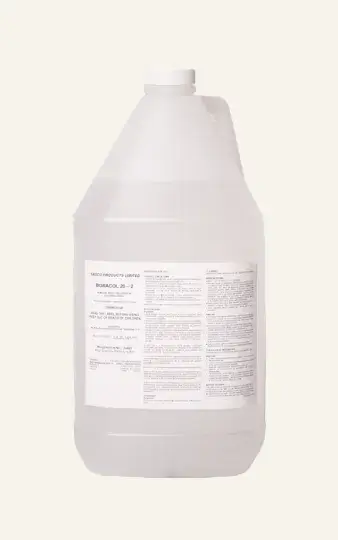
Boracol 20-2 is a clear solution of Disodium Octaborate Tetrahydrate (DOT) at 19.6% concentration in a propylene glycol carrier — the highest borate loading available in the Boracol family without the addition of a secondary biocide. This single-active formulation is intentional. For many applications, particularly in new construction and early-stage preventive treatment, a high-concentration borate alone is exactly what is needed.
Borate chemistry has been used in professional timber preservation for over 70 years. It works by exploiting the fundamental biology of the organisms that attack wood. Fungi and wood-boring insects must ingest their food source to metabolise it. When they consume borate-treated wood, the boron ions interfere directly with enzyme production and cellular energy transfer — processes that are essential to all biological life but that have no parallel mechanism in mammals at the concentrations used in timber treatment.
This makes borate preservatives uniquely valuable: highly effective against biological wood destroyers, yet presenting low mammalian toxicity when used as directed. It is why borate-based products like Boracol 20-2 carry a substantially more favourable safety profile than older oil-based or heavy-metal preservatives while still offering genuine, long-term efficacy.
Boracol 20-2 vs. Boracol 20-2BD — Which Do You Need?
Both products share the same borate concentration. The decision between them comes down to the nature and severity of the biological threat you are addressing.
19.6% DOT in propylene glycol. No secondary biocide. Ideal for preventive treatment of sound timber, new construction, and early-stage remedial work where surface mould is not the primary concern. Lower hazard classification.
19.6% DOT plus 1.0% DDAC in propylene glycol. The DDAC provides immediate surface antimicrobial action. Best suited for established mould colonies, heavy fungal contamination, or situations requiring a stronger surface kill alongside deep borate penetration.
If your timber is structurally sound, free of active surface mould, and you are treating preventively or addressing early insect or sub-surface fungal activity — Boracol 20-2 is the appropriate choice. It is simpler, carries a lower hazard classification, and is registered specifically for the scenarios most log home owners and maintenance professionals encounter.
Applications for Log Homes and Timber Structures
Boracol 20-2 is effective across a wide range of log home and timber structure applications. It excels wherever the goal is to load boron into sound wood before biological threats gain a foothold, or to arrest early-stage decay and insect activity in existing structures.
- New log home construction: Apply to all log surfaces, particularly ends and checks, immediately after the shell is assembled. New softwood logs — pine, spruce, and fir — have zero natural resistance to insects and fungi. Boracol 20-2 applied before any coating system is the foundation of a sound long-term protection strategy.
- Attic and roof framing: Roof structures accumulate moisture from humidity, inadequate ventilation, and minor leaks. Preventive borate treatment of framing members dramatically reduces the risk of decay and Anobiid beetle infestation over the life of the structure.
- Crawl space floor joists and beams: Ground moisture and restricted airflow make crawl spaces the single most common site of serious wood decay in residential structures. Pre-treatment of all accessible timber with Boracol 20-2 before encapsulation or insulation is strongly recommended.
- Exterior siding and decorative timbers protected from direct rainfall: Fascia boards, log siding under extended eaves, and decorative structural elements benefit significantly from borate pretreatment before staining or finishing.
- Remedial treatment of early-stage decay and insect infestations: When decay fungi or wood-boring insects are detected in the early stages, Boracol 20-2 applied at treatment concentration can arrest progression and help control insects as they emerge over the subsequent 3–5 year period.
- Log home restoration prep: Before applying any chinking, sealant, or finish coating system during a log restoration project, all bare wood should receive a thorough Boracol 20-2 application. This ensures the preserved timber beneath your new finish system is protected for the long term.
Product limitations to observe: Boracol 20-2 is not registered for use in habitable spaces with prolonged human exposure, on wood in direct ground contact, in areas subject to direct rainfall or water leaching, in animal rearing facilities, or on food contact surfaces. Treated wood must be sealed or used in locations where post-application exposure will not occur.
Estimating Your Product Requirements
Coverage with Boracol 20-2 is somewhat variable because the product is designed to be applied to refusal — applied until the timber will absorb no more. Highly porous timber, checks, and end grain will absorb significantly more than smooth, dry surfaces. Use the table below as your planning baseline and budget conservatively.
| Application Scenario | Coverage Rate | Notes |
|---|---|---|
| Preventive treatment — sound timber | As specified | Apply to refusal |
| Early fungal decay — remedial | 1 m² per litre | 2 coats recommended |
| Wood-boring insect treatment | 1 m² per litre | 2 coats recommended |
| Already attacked timber | Variable — will absorb more | Budget 30–50% extra |
Divide remedial treatments between two separate applications, allowing adequate time between coats for penetration and drying. Do not dilute Boracol 20-2 — it is formulated at working concentration and should be applied full strength in all circumstances.
Application Process for Professional Results
Strip all surface coatings
Remove all paint, stain, varnish, oil, or other impermeable coatings from timber to be treated. Boracol 20-2 penetrates only bare wood — any surface coating will block absorption entirely. For log restoration projects, media blasting, corn cob blasting, or chemical stripping are commonly used to prepare surfaces effectively.
Assess and replace unsound timber
Identify and remove any timber that has lost structural integrity due to advanced decay. Boracol 20-2 is a preservative — it protects and arrests decay in sound or mildly affected wood. It will not restore the mechanical strength of wood that has already been significantly compromised. Replacing structurally failed timber before treatment is essential.
Protect non-target areas and systems
Cover all electrical panels, junction boxes, switches, and water heaters. Remove insulation that is in contact with wood to be treated. Cover or relocate sensitive plants and vegetation — borates can be phytotoxic at elevated concentrations.
Apply by brush, roller, or spray to refusal
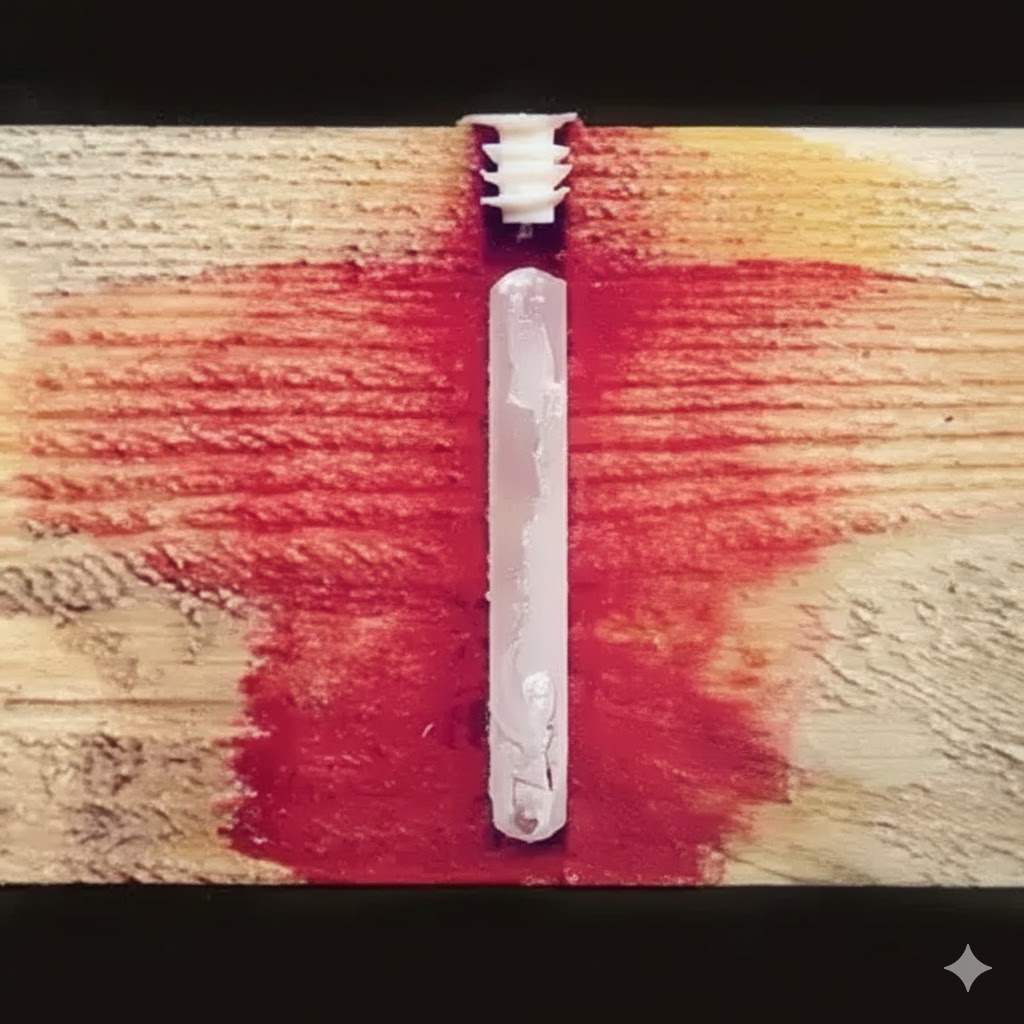
Apply Boracol 20-2 full strength using a brush, roller, or spray system. Work methodically across the surface, paying particular attention to log checks, end grain, knots, and any areas of visible moisture damage — these are the preferred entry points for decay organisms. Apply until the surface reaches refusal — it will no longer absorb product. Allow the first application to dry before applying a second coat for remedial treatments.
Allow to dry before sealing or finishing
Allow the treated surface to dry fully before applying any chinking, sealant, or finish coat. Confirm compatibility between Boracol 20-2 treated surfaces and your chosen finish system — most professional log home finish products are compatible with dried borate-treated timber. Sealing the treated surface promptly after drying is important, as borates can leach from untreated surfaces exposed to direct rainfall.
Handling and Personal Protective Equipment
Boracol 20-2 carries a comparatively favourable safety profile relative to many timber preservatives, but it is a registered pest control product and must be handled with appropriate care. The following PPE is required during application:
If in eyes: hold eye open and rinse with water for 15–20 minutes — remove contact lenses after 5 minutes. If on skin: remove contaminated clothing and rinse skin with water for 15–20 minutes. If swallowed: call a Poison Control Centre immediately. Have person sip water if able to swallow. Do not induce vomiting. Always take the container, label, and Registration Number when seeking medical attention.
What to Expect Over Time
One of the most important things to understand about borate wood preservation is the timeline of effectiveness for active insect infestations. Boracol 20-2 is highly effective — but it works progressively, not instantaneously.
Wood-boring insect colonies — Anobiid beetles, Powderpost beetles, and others — can be established deep within the timber, well beyond the immediate penetration zone of any surface-applied product. As insects move through the wood and emerge through the treated zones, they ingest borate at levels sufficient to control the infestation. This process takes 3 to 5 years as the colony is progressively exposed.
In the meantime, the boron loading in the treated timber zones prevents re-infestation by new organisms attempting to enter from the surface. Each treatment reinforces the protection and reduces the likelihood of future infestation cycles.
For fungal control, results are more immediate — borate-loaded wood becomes a poor substrate for decay organisms, and active decay in sound timber is typically arrested quickly once adequate borate concentrations are achieved in the affected zones.
Pack Sizes
Boracol 20-2 is available in four sizes to suit projects of any scale:
For restoration contractors and volume purchasers, 20-litre and 200-litre pricing is available from SASCO Products. Contact our Dartmouth office to discuss volume requirements and delivery options across Atlantic Canada.
Talk to a Wood Preservation Specialist
Not sure whether Boracol 20-2 or 20-2BD is right for your project? Our team can help you assess your situation and choose the right treatment approach.