

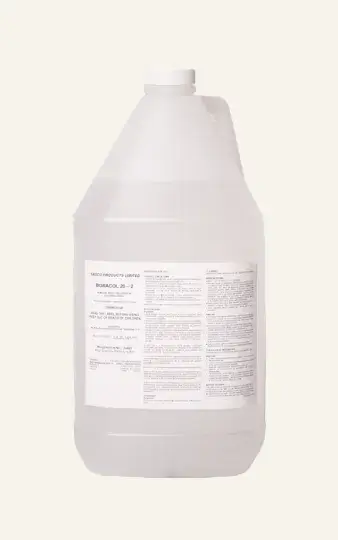
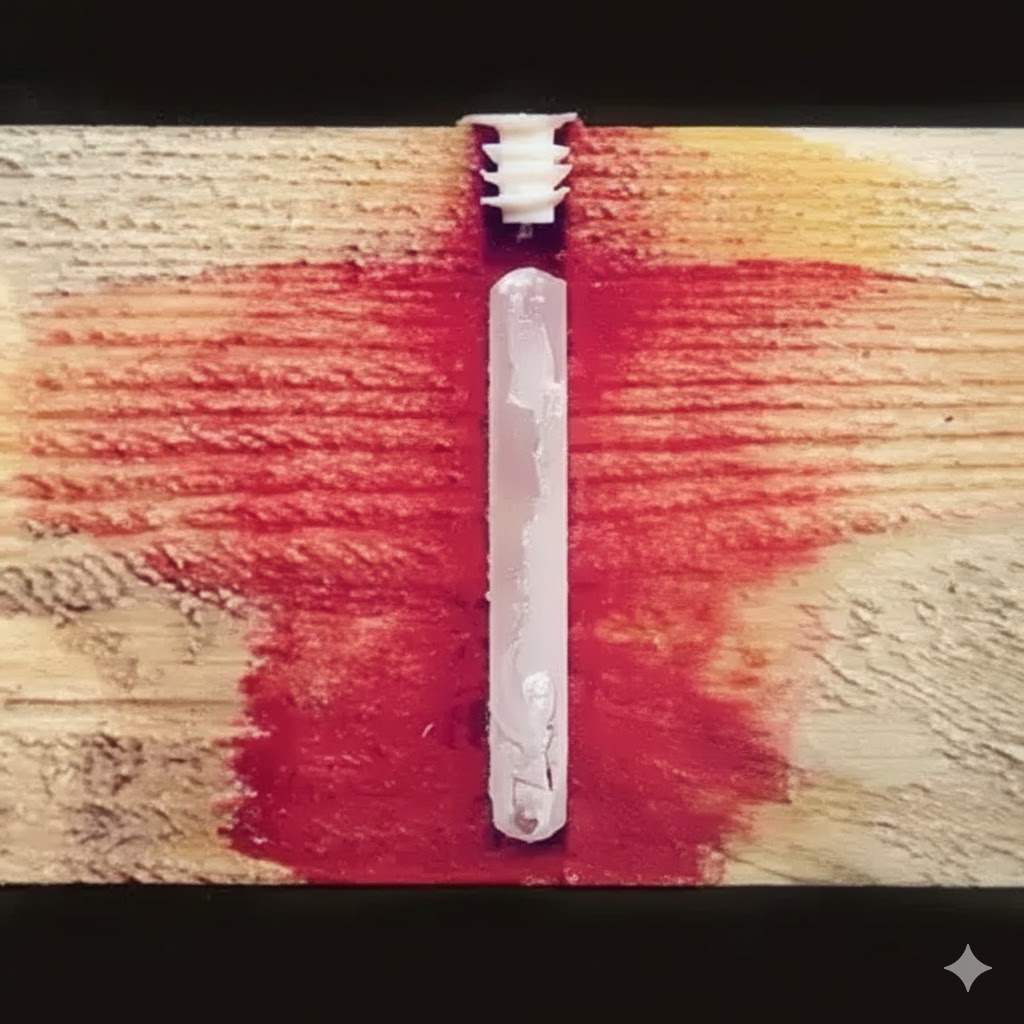





All three Boracol products share the same foundation — borate chemistry, the same penetrating approach to wood preservation, and the same commitment to long-term efficacy. But the differences between them are meaningful. Choosing the right product for your specific situation is not merely a matter of preference — it directly affects how well your timber is protected, and for how long.
This guide breaks down exactly what separates Boracol 10-2BD, Boracol 20-2, and Boracol 20-2BD — their active ingredients, concentrations, carrier systems, intended applications, and hazard profiles — so you can make a confident, informed choice.
The Three Products — Side by Side
Active Ingredients — What's Actually in Each Product
All three Boracol formulations are built on the same borate foundation — Disodium Octaborate Tetrahydrate (DOT) — a proven wood preservation active that diffuses into timber cell structure and disrupts the metabolic processes of fungi, mould, and wood-boring insects. Where the products diverge is in concentration, secondary actives, and carrier systems.
The DDAC component — Didecyl Dimethyl Ammonium Chloride — is what separates the "-BD" products from Boracol 20-2. DDAC is a quaternary ammonium biocide that provides immediate surface antimicrobial kill against mould, fungi, and bacteria. While DOT works progressively over weeks and months as it diffuses deeper into wood fibre, DDAC acts quickly at the point of application. For situations with active surface mould or established biological contamination, DDAC provides the fast front-end action that pure borate alone cannot match.
The carrier system also matters more than most people realise. All three Boracol products use a propylene glycol carrier — a humectant that keeps the active ingredients in mobile solution longer, enabling deeper penetration into timber before the carrier evaporates. In all cases, the glycol carrier is what separates these products from simpler water-only formulations and contributes to their penetrating performance.
Detailed Feature-by-Feature Comparison
| Feature | Boracol 10-2BD | Boracol 20-2 | Boracol 20-2BD |
|---|---|---|---|
| Borate concentration | 9.8% DOT | 19.6% DOT | 19.6% DOT |
| DDAC present | Yes — 2.0% | No | Yes — 1.0% |
| Carrier system | Propylene glycol + water | Propylene glycol | Propylene glycol |
| Surface mould kill | Yes — immediate | No | Yes — immediate |
| Fungal decay control | Effective — moderate depth | Effective — high borate load | Effective — high borate load + surface kill |
| Insect control | Effective — progressive | Effective — progressive | Effective — progressive |
| Penetration depth | 3–5mm initial, deeper over time | 3–5mm initial, faster in porous wood | 3–5mm initial; carrier extends dwell time |
| Hazard classification | Danger — corrosive | Lower hazard | Danger — corrosive |
| Primary use case | General purpose, marine, renovation | New construction, preventive, low-hazard | Log homes, structural restoration |
| Mould eradication coverage | 2–3 m² per litre | N/A — no surface kill | 2–3 m² per litre |
| Preventive coverage | 3–6 m² per litre | As specified | 3–6 m² per litre |
| Remedial coverage (fungi/insects) | 1 m² per litre × 2 coats | 1 m² per litre × 2 coats | 1 m² per litre × 2 coats |
| Available pack sizes | 1L, 4L, 20L, 200L | 1L, 4L, 20L, 200L | 1L, 4L, 20L, 200L |
| Registration | No. 25665 — PCPA | No. 24493 — PCPA | No. 25664 — PCPA |
Which Product Works Where
¹ Boracol 20-2BD is fully effective in attic and crawl space applications. Its higher hazard classification (Danger Corrosive) requires stricter PPE and adequate ventilation in confined spaces — follow all label safety requirements carefully.
² Boracol 20-2BD is not recommended for marine teak and hardwood decking. Teak's natural oils already resist absorption, and 20-2BD's higher concentration and propylene glycol carrier make adequate penetration difficult on these surfaces. Boracol 10-2BD is the appropriate choice for marine hardwood applications.
Choose by Scenario — Real-World Situations
Still not sure which product fits your project? These real-world scenarios map common situations to the right product choice.
For new, sound timber with no existing biological activity, Boracol 20-2 is the ideal choice. Its high borate concentration provides excellent preventive loading with a lower hazard profile and no DDAC — appropriate for broad application in a new construction environment.
Active surface mould requires a product with DDAC for immediate kill alongside the borate for deeper protection. Both Boracol 10-2BD and 20-2BD apply — for a typical residential attic, 10-2BD is well suited. For more severe or extensive mould in a larger structural context, step up to 20-2BD.
This is the primary use case for Boracol 20-2BD. The combination of high borate concentration and DDAC addresses both the surface contamination revealed by blasting and any sub-surface fungal activity in the soft areas, while the propylene glycol carrier maximises penetration into the dense log faces before the finish system is applied.
Marine applications with mixed surface mould and structural concerns are the home territory of Boracol 10-2BD. Its dual-active formula handles the surface mould on the teak and framing while establishing borate protection in the bilge timbers — and its mid-concentration profile is well matched to the range of timber species found on most wooden vessels.
All three products control wood-boring insects via borate ingestion. For an established infestation in a crawl space, the higher borate loading of Boracol 20-2 or 20-2BD is preferable. If surface mould is also present (very common in crawl spaces), choose 20-2BD. If the timber is clean and the goal is purely insect control, Boracol 20-2 is appropriate and carries a lower hazard classification.
Boracol 10-2BD is the most versatile product in the Boracol family for a contractor needing one product across diverse residential applications. Its dual-active formula and mid-strength concentration handle the majority of situations encountered in general residential wood preservation work, from surface mould to structural insect issues.
What All Three Products Have in Common
Despite their differences, all three Boracol products share important characteristics that apply regardless of which one you choose.
All three products migrate into wood cell structure rather than forming a surface barrier. Protection develops and deepens over days, weeks, and months after application — it is not entirely dependent on an intact surface coat remaining in place.
All Boracol products are formulated at working concentration and must be applied undiluted. Diluting any of these products reduces active loading below effective treatment thresholds and voids the product's performance expectations.
Paint, varnish, stain, oil, and other impermeable coatings block absorption entirely. All Boracol products must be applied to bare, uncoated wood surfaces to be effective. Surface preparation is not optional — it is the prerequisite for any result.
All three products control wood-boring insects through borate ingestion — not contact kill. Established colonies deep in timber are controlled progressively as insects emerge and move through treated zones. This is not a failure of the product; it is the nature of borate chemistry in deep structural applications.
All three Boracol products are compatible with most professional-grade water-based wood finishes — including the Sansin ENS and Classic product lines — when applied to fully dried treated surfaces. Always confirm compatibility with your specific finish before application.
All three products are federally registered for use in Canada under the Pest Control Products Act. Each carries specific use restrictions that must be observed — these restrictions are listed on the product label and must be read before use.
What None of These Products Can Do
Understanding the limits of any preservative is as important as understanding its strengths. All three Boracol products share the following restrictions — regardless of which one you choose.
All three Boracol products are toxic to fish and other aquatic organisms. Do not apply in circumstances that would allow the product to enter lakes, streams, ponds, estuaries, or other waterways. Do not discharge product-containing effluent to sewer systems without prior notification to the sewage treatment plant authority.
Available in Four Sizes — All Three Products
All three Boracol products are available in the same four pack sizes, making it straightforward to scale your purchase to your project:
Volume pricing is available on 20-litre and 200-litre orders across all three products. If you are a contractor or restoration professional looking to stock all three, contact the SASCO team in Dartmouth to discuss pricing and supply arrangements.
Still Not Sure Which Product to Choose?
Our team in Dartmouth can assess your specific situation — timber species, threat level, application environment — and recommend exactly the right product. No guesswork, no overselling.